Quick answer: yes, do I need a TV licence for BBC iPlayer applies to almost everything on the service, live or catch-up, with only a small number of exceptions. This has been the rule since 2016 and makes iPlayer different from every other catch-up app, which generally does not require a licence at all.
Millions of people happily skip live television and assume that makes them exempt from a TV licence, only to fall foul of one rule they never knew existed. Do I need a TV licence for BBC iPlayer is not a simple yes or no question the way it is for every other catch-up service, since iPlayer has operated under its own separate rule since 2016. This guide clears up exactly what counts as iPlayer use, the genuine exceptions that exist, and how TV Licensing can actually tell.
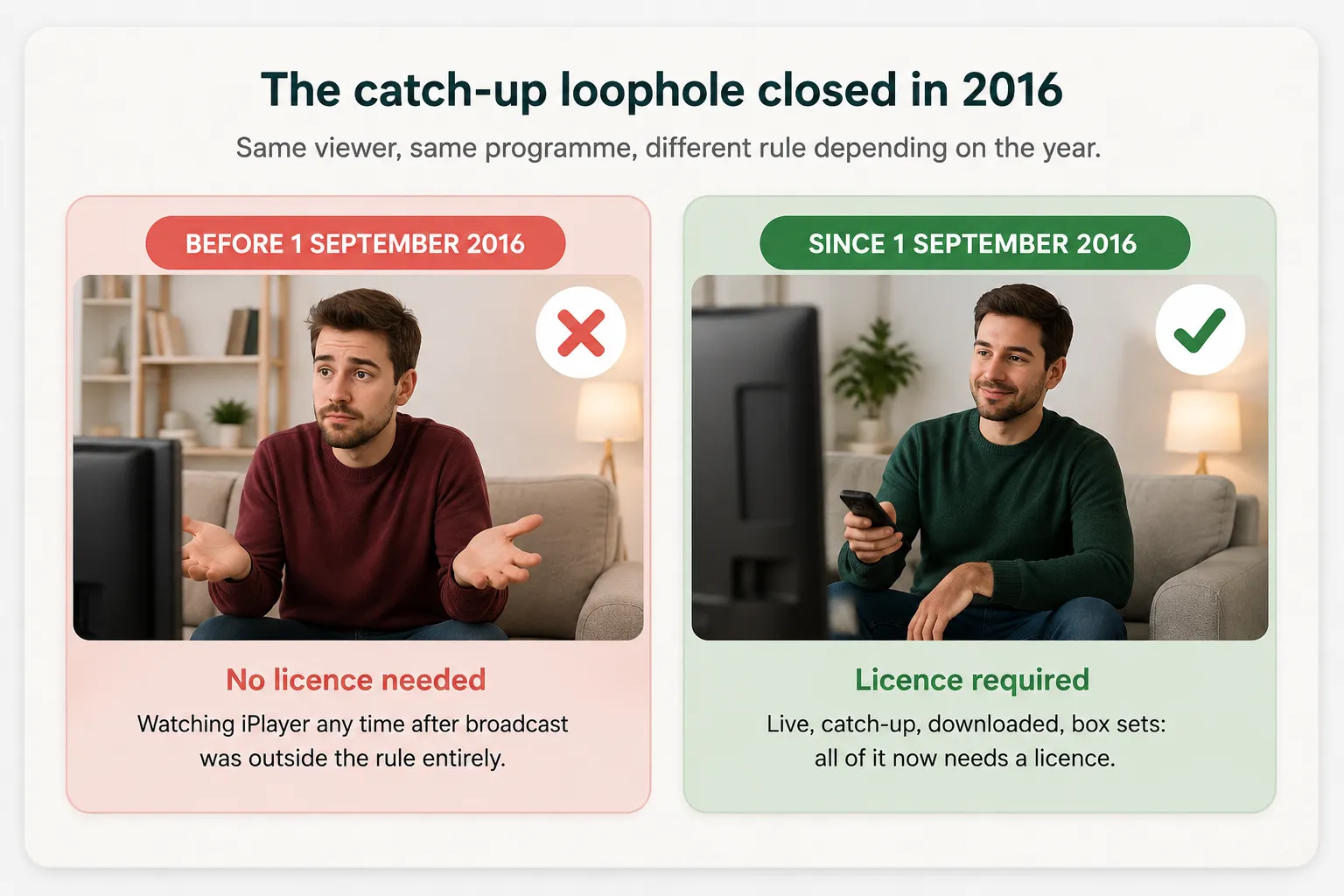
The Loophole That Closed in 2016
Before 1 September 2016, the rule was simpler and, for a growing number of people, easy to exploit. A licence was only required to watch iPlayer content live, at the moment of broadcast. Catch-up programmes, watched any time after they first aired, fell outside that requirement entirely. As streaming habits shifted and more people deliberately timed their viewing to avoid live broadcasts, this cost the BBC an estimated £150 million a year in licence fee income it would otherwise have collected.
The rule closed that gap completely. Since that date, any use of BBC iPlayer requires a licence, regardless of whether the programme is live, was uploaded that morning, or has been sitting in the catch-up library for months. There is no length of time after broadcast that makes a programme exempt.
What Actually Counts as Using iPlayer
The rule is broader than many people expect, covering more than just sitting down to watch a full episode.
Requires a licence
Does not require a licence
The live events point catches people out more than they expect. Major occasions shown through iPlayer, such as the King’s Speech, royal weddings, Glastonbury, and international sport like the Olympics or the Rugby World Cup, all fall under the same rule as any other live broadcast. Watching a one-off event you have no interest in for the rest of the year still requires a licence for that moment.
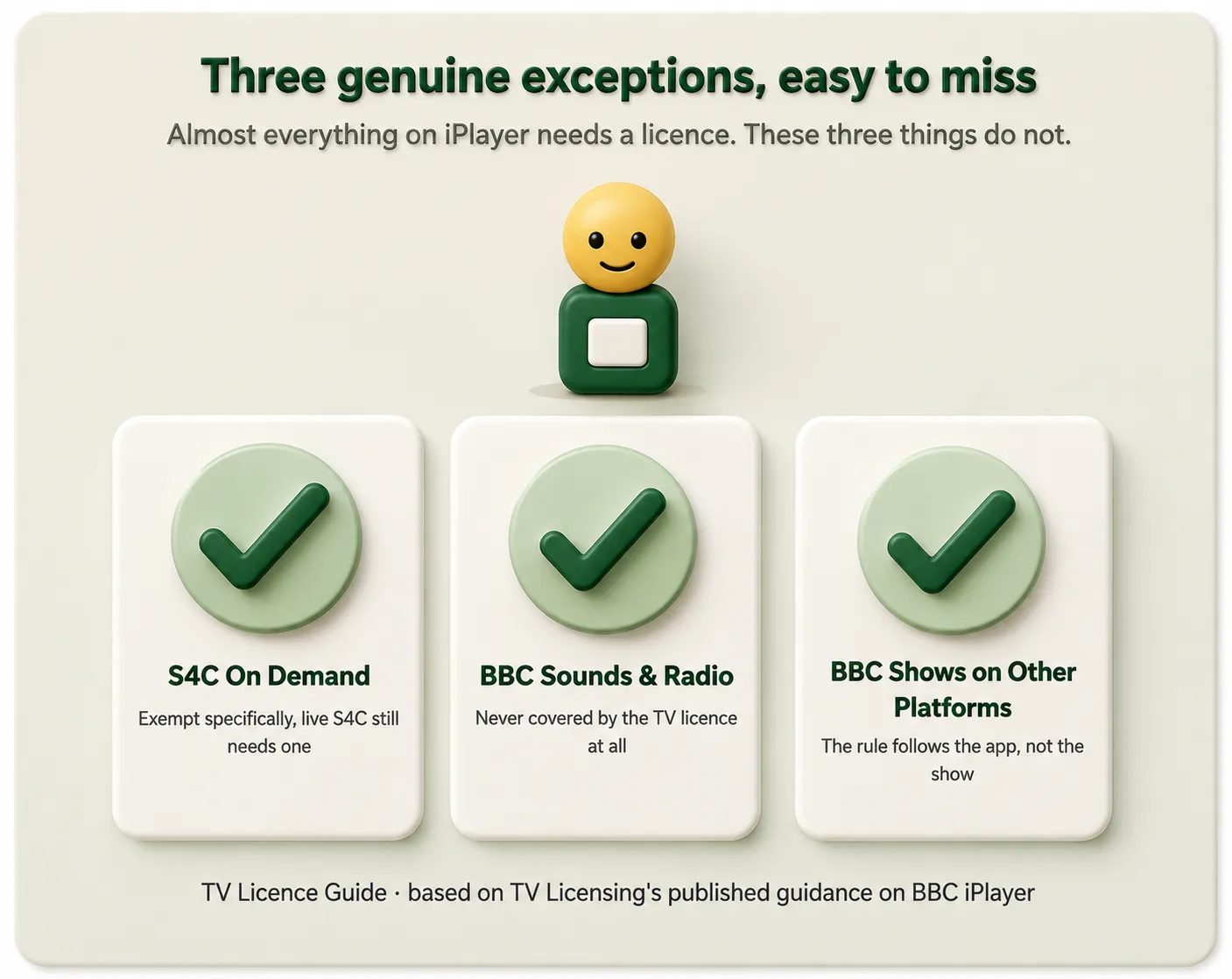
The Exceptions Almost Nobody Mentions
Most guides to this topic stop at “iPlayer always needs a licence” and leave it there. That is true for the vast majority of what is on the service, but there are genuine exceptions worth knowing, since they can matter a great deal to specific households.
S4C On Demand Is Exempt
On demand content from S4C, the Welsh language channel, is specifically excluded from the iPlayer licensing requirement, even though it is accessed through the same app. This is a narrow exception. It applies to S4C on demand content only, not to live S4C broadcasts, which are treated the same as any other live channel and do require a licence at the moment of broadcast.
Radio and BBC Sounds Are Not Covered by This Rule at All
The TV licence exists to cover television content, and BBC radio has never fallen under it, regardless of how it is accessed. Listening to BBC Sounds, live radio stations, or radio catch-up content requires no licence whatsoever, on any device, including a smart speaker, phone, or car radio.
BBC Content on Other Platforms Follows Different Rules
This is the exception most likely to genuinely surprise people. The licence requirement is tied to the iPlayer service itself, not to BBC content wherever it happens to appear. If a BBC programme has been licensed to a different platform, such as Netflix, and you watch it there rather than through iPlayer, no TV licence is required for that viewing. The BBC show does not carry the licence requirement with it between platforms; the iPlayer app specifically does.
How TV Licensing Can Actually Tell
iPlayer requires a free BBC account to use anything on the service, and signing up asks for a postcode as part of registration. TV Licensing has stated this postcode is not used to directly identify individual non-payers, though it does feed into broader address-level records that inform the standard letter sequence covered in our guide to TV Licensing letters. There is no technical barrier stopping someone without a licence from signing in and watching content; the system relies on the same combination of database matching and honesty that governs the rest of TV licensing, rather than blocking access outright.
Watching iPlayer Away From Home
A licence covers an address, not a person, which matters when a device travels. If you use iPlayer on a phone or laptop away from home, it remains covered by your home licence as long as the device is running on its own battery power and is not plugged into the mains at another address. Plug it in elsewhere, and you are relying on that address having its own licence rather than yours. This is the same rule that applies to any live viewing away from home, and it is covered in more general detail in our guide to whether you need a TV licence at all.
Students living away from home during term time need to apply this carefully. A parent’s licence at the family home only covers a device while it stays on battery power; a laptop plugged in and used for iPlayer in halls of residence or a rented room generally needs a licence covering that address specifically.
Common Myths About iPlayer and TV Licences
“I only watch catch-up, so I’m fine”
This has not been true since 2016. Catch-up on iPlayer specifically requires exactly the same licence as live viewing.
“They can’t actually check what I watch”
Whether or not usage is monitored in detail has no bearing on whether the licence is legally required.
“BBC content is BBC content wherever I watch it”
Not for licensing purposes. The requirement is tied to the iPlayer app itself, not to BBC programmes appearing on other platforms.
“I need a licence to listen to Radio 1 on iPlayer”
Radio content, including through BBC Sounds or radio stations accessed via iPlayer, has never required a TV licence.
Frequently Asked Questions
Do I need a TV licence to watch catch-up on BBC iPlayer?
Yes. Since 1 September 2016, a TV licence is required for any use of BBC iPlayer, including catch-up programmes that finished airing days or weeks earlier, not just live content.
Can I watch BBC programmes without a TV licence if they are on Netflix?
Yes. The licence requirement is tied to BBC iPlayer specifically, not to BBC content in general. If a BBC programme is available through a different platform such as Netflix, watching it there does not require a TV licence.
Do I need a TV licence to watch S4C on BBC iPlayer?
No, not for on demand S4C content. This is a specific exception to the usual iPlayer rule, though live S4C broadcasts still require a licence in the same way any other live channel does.
Do I need a TV licence to listen to BBC Sounds or BBC radio?
No. The TV licence requirement covers television content on iPlayer, not radio. Listening to BBC Sounds or BBC radio stations does not require a licence, on any device.
Does BBC iPlayer know if I have a TV licence?
iPlayer requires a free BBC account to use, and signing up asks for a postcode, which TV Licensing has stated it does not use to identify individual non-payers, though it can be linked to broader address-level records. There is no technical block that prevents signing in without holding a licence.